For years I’ve worked in environments where people talk about transformation as if it were a slide deck.
A framework.
A playbook.
A tidy sequence of steps.
But real change rarely looks like that.
It’s messy. Human. Non-linear. Full of tensions, trade-offs and things that don’t fit neatly into boxes.
And for many neurodivergent people, that’s actually where our strengths live.
Seeing patterns others miss.
Questioning assumptions.
Noticing contradictions.
Holding multiple perspectives at once.
Yet most transformation literature doesn’t make space for that way of thinking.
So I wrote a book that does.
Introducing How Might We?
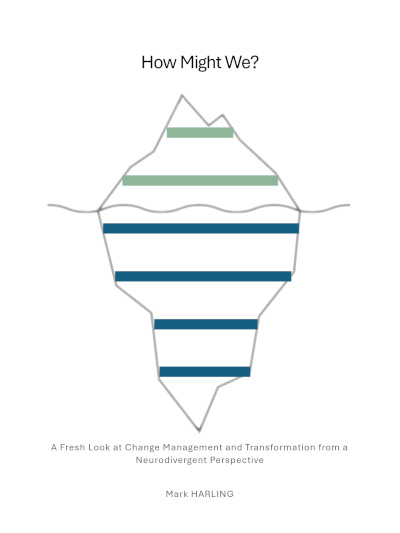
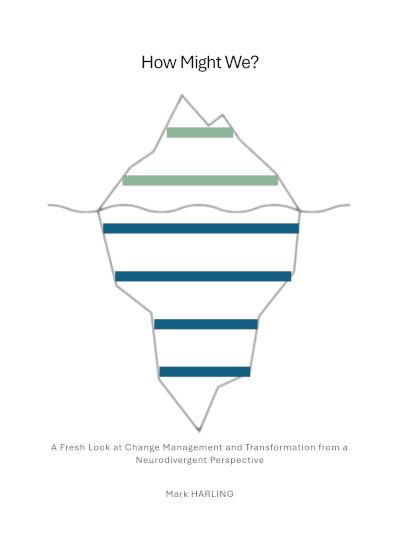
How Might We? A Fresh Look at Change Management and Transformation from a Neurodivergent Perspective is a practical book about what real transformation actually looks like in organisations.
Not the theory version.
The lived version.
It draws on years of experience working across operations, leadership teams and transformation initiatives — including the successes, the frustrations and the lessons learned along the way.
And it asks a simple question:
What becomes possible if we approach change differently?
Why neurodivergent readers might find this book interesting
Many of the ideas in the book come directly from ways of thinking that are common among neurodivergent people:
-
Systems thinking rather than linear thinking
-
Curiosity about root causes
-
Sensitivity to hidden tensions and contradictions
-
A drive to improve things that others have accepted as “just the way they are”
These qualities are often treated as inconvenient in organisations.
In reality, they can be powerful assets in transformation work.
This book explores how.
What you can expect inside the book
Rather than offering another “10 steps to change”, the book explores the terrain of transformation.
Inside you’ll find:
1. A realistic view of organisational change
Why many transformation initiatives stall — and what’s really going on beneath the surface.
2. Ways of navigating complexity
How to recognise and work with polarities such as:
-
stability vs innovation
-
speed vs care
-
control vs autonomy
Instead of pretending these tensions don’t exist.
3. Practical tools and approaches
Things you can actually use in real teams and organisations, including:
-
root cause thinking
-
team coaching
-
continuous improvement approaches
-
human-centred leadership
4. Stories from the field
Examples grounded in real implementation — not just theory.
Because transformation only becomes meaningful when it works in practice.
The bigger idea behind the book
At its heart, this book is about possibility.
The possibility that:
-
organisations can change without burning people out
-
productivity and wellbeing can coexist
-
different ways of thinking can strengthen teams rather than being “managed”
And that neurodivergent perspectives can play an important role in making that happen.
If you’ve ever felt that the standard playbooks don’t quite match the reality you see around you, you may recognise some of these ideas.
Want to explore further?
You can learn more about the book and get your copy here:
👉 https://wsc.lemonsqueezy.com/
If you read it, I’d love to hear what resonates with you.
#NeurodivergentLeadership #Neurodiversity #ChangeManagement #Transformation #SystemsThinking #ContinuousImprovement #Leadership #WorkplaceChange #Yinsight #HowMightWe